Mastering 'Vibe Coding': How to Build Apps Using Natural Language in 2026
Mastering "Vibe Coding": How to Build Apps Using Natural Language in 2026
Author: Vaibhav Kumar | Agentic AI & DevOps Systems Designer
The End of Syntax Errors? Why "Vibe Coding" is the Future
Remember when we used to spend hours debugging a missing semicolon? That feels like ancient history now. In 2026, a new paradigm has taken over the developer world: Vibe Coding.
It’s not just a buzzword. It’s a fundamental shift in how we interact with machines. Instead of memorizing strict syntax or fighting with boilerplates, developers now focus on intent, architecture, and yes—the "vibe" of the application. With the rise of powerful reasoning models like DeepSeek R1 and GPT-5, your ability to articulate a problem in plain English is now more valuable than your ability to reverse a binary tree.
But here’s the promise: If you master Vibe Coding today, you can build production-ready apps 10x faster than traditional coding. If you ignore it? You risk becoming the "assembly programmer" of the AI era.
Table of Contents
- What is "Vibe Coding" Exactly?
- Why It Matters in 2026
- Step-by-Step Guide: Your First Vibe Coded App
- Common Mistakes Beginners Make
- Pro Tips Most Blogs Don't Tell You
- Tools and Resources
- Frequently Asked Questions (FAQs)
What is "Vibe Coding" Exactly?
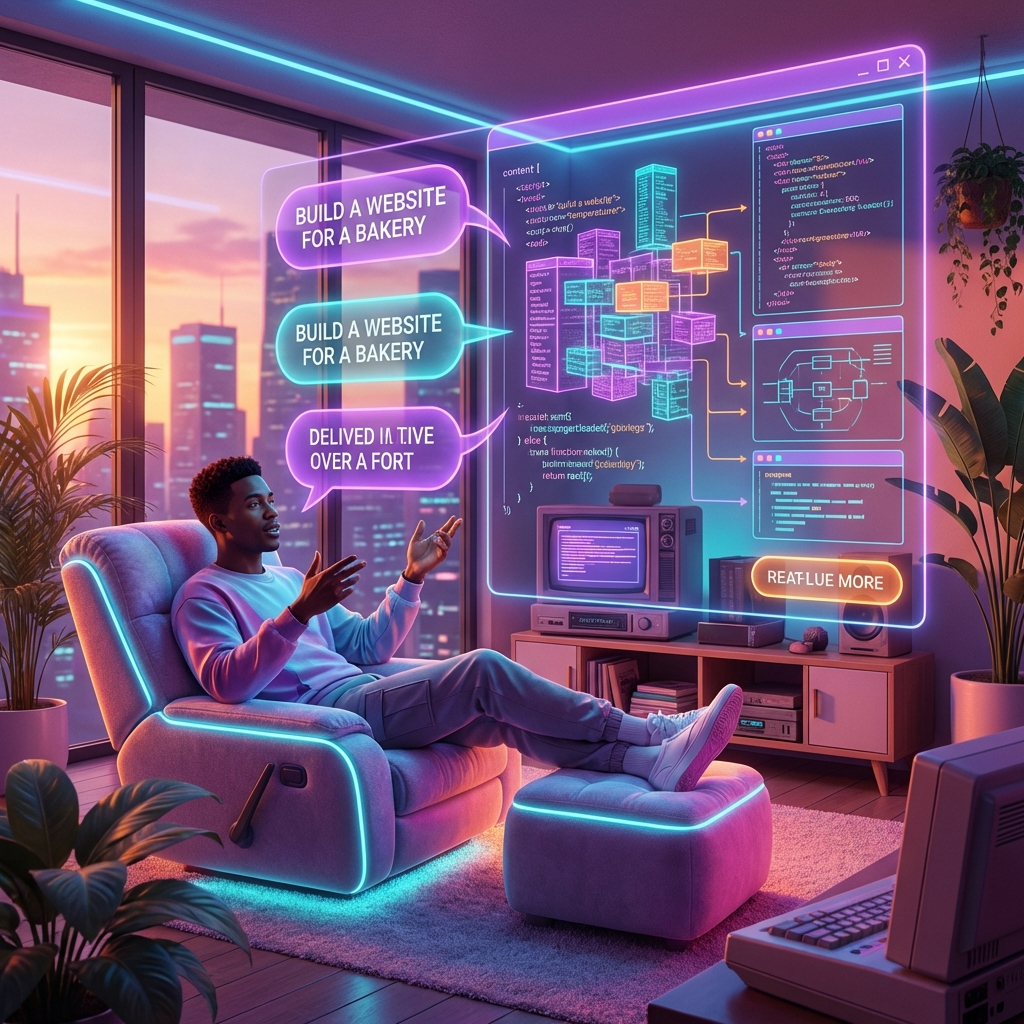
Vibe Coding (or Natural Language Programming) is the practice of using advanced Agentic AI models to generate, debug, and deploy code based on high-level, natural language descriptions.
Unlike "No-Code" tools of the past, Vibe Coding doesn't hide the code. The code exists—it's just written by an AI agent (like DeepSeek or Claude) under your supervision. You act less like a bricklayer and more like an architect.
- Traditional Coding: Writing
function calculateTotal(a, b) { return a + b; } - Vibe Coding: Telling the AI, "Create a pricing component that calculates the total dynamically, but make sure it handles currency conversion for users in India and the US automatically."
The "vibe" refers to the context, style, and user experience you want to achieve. The AI handles the logic to get there.
Why It Matters in 2026
The landscape of software development has shifted dramatically:
- Speed to Market: MVP cycles have dropped from months to days.
- Democratization: You don't need a CS degree to build secure, scalable backends.
- Maintenance: AI agents can refactor legacy codebases (the "spaghetti code" of 2024) into clean, modern architectures in minutes.
- Security: As highlighted in our Vibe Coding Security Guide, automated guardrails now catch vulnerabilities before they hit production.
NOTE Stat Check: According to the 2026 State of DevOps Report, 70% of new enterprise applications are now built using Agentic AI workflows.
Step-by-Step Guide: Your First Vibe Coded App
Ready to try it? Let’s build a Personal Finance Dashboard without writing a single line of React manually.
Step 1: Set the "Vibe" (Context Engineering)
Don't just say "Build a dashboard." Be specific about the feeling and functionality.
- Prompt: "I want a personal finance dashboard with a 'Neo-Brutalism' aesthetic. It should track expenses, visualize monthly trends, and have a dark mode that feels professional and calm."
Step 2: Select Your Agent
For complex logic, use a Reasoning Model.
- DeepSeek R1: Best for backend logic and database schema design.
- Claude 3.5 Sonnet: Excellent for frontend UI/UX and Tailwind styling.
Step 3: Iterate with Feedback
The AI will generate the code. Run it. If the button looks wrong, don't edit the CSS.
- Correction: "The 'Add Expense' button feels too aggressive. Make it softer, maybe rounder corners and a pastel accent color."
Step 4: The "Human in the Loop" Review
This is critical. AI makes mistakes.
- Check for hardcoded secrets (Refer to our guide on Android AI Secrets).
- Verify the logic flow.
Common Mistakes Beginners Make
- Trusting the Output Blindly: AI can hallucinate imports or use deprecated libraries. Always run the build.
- Vague Prompts: "Fix the bug" is bad. "The login form isn't persisting the session token after refresh" is good.
- Ignoring Security: Just because AI wrote it doesn't mean it's secure. Always audit for SQL injection or XSS flaws.
- Skipping Fundamentals: You still need to understand how HTTP requests work. Vibe coding removes syntax, not computer science.
Pro Tips Most Blogs Don't Tell You
- The "Rule of Two": Use two different AI models. Have Model A write the code, and Model B critique it. GPT-5 writes, DeepSeek R1 reviews.
- Git-Blame the Robot: Commit AI-generated code with a specific tag (e.g.,
git commit -m "feat: login flow (via DeepSeek)"). This helps in debugging later. - Local LLMs are Faster: For quick iterations, running a quantized 8B model locally (see our VPS Hosting Guide) can be faster than waiting for cloud API latency.
Tools and Resources
- Cursor / VS Code AI: The standard IDEs for Vibe Coding.
- v0.dev: For instant UI generation.
- Replit Agent: For full-stack app deployment.
- Ollama: For running local models privacy-first.
Frequently Asked Questions (FAQs)
1- Will Vibe Coding replace software engineers?
No, but it will replace engineers who refuse to use AI. The role is shifting from "writer" to "editor" and "architect."
2- Is Vibe Coding secure for enterprise apps?
Yes, IF you implement strict guardrails. Verify all code, use automated security scanning in your CI/CD pipeline, and never expose API keys.
3- Which programming language is best for Vibe Coding?
Python and TypeScript are the best choices in 2026 because the AI models have the most training data on them.
4- Can I facilitate Vibe Coding on a low-end laptop?
Absolutely. Cloud-based agents do the heavy lifting. You just need a browser.
5- Where can I learn more about Agentic AI?
Check out our detailed breakdown on The New Era of DevOps to see how agents are transforming infrastructure.
Internal Link Suggestions
External Authority Links
IMPORTANT Share this Article: If you found this "Vibe" helpful, share it with your dev friends! Social Caption: "Just built my first app using pure vibes. 🌊 Coding in 2026 is wild. Check out this guide on #VibeCoding #DeepSeek #DevOps"
Vaibhav Kumar
Academic Contributor
Dr. Vaibhav is a seasoned educator and content strategist committed to helping students navigate their academic journey with the best possible resources.
Related Resources
More articles you might find helpful.
Found this helpful?
Share it with your friends and help them stay ahead!